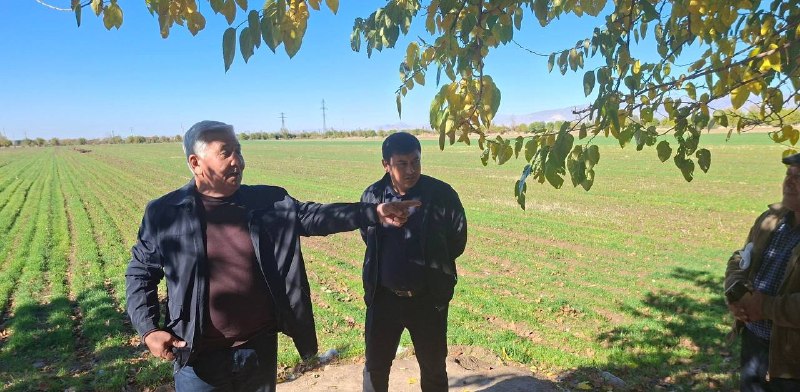

New scientific works of young scientists on mash and wheat are under discussion

Murodulla Amirov, a doctoral student of the Rice Research Institute, presented the results of his scientific research on the topic "Effect of nitrogen-assimilating bacteria on the yield and quality indicators of promising mash varieties". He noted that mung bean is one of the most important leguminous crops for food worldwide. It is especially important for the enrichment of the soil with natural nitrogen through the bacteria in the roots, resistance to drought and high nutritional value.
- Our study showed that as a result of inoculation of mung bean seeds with various strains of Bradyrhizobium and "Belanessia" biopreparation, the productivity increased by more than 20% compared to the control group. For example, for the variety "Barqaror" of mash, when treated with "Belanessia", the yield of 28.6 centners per hectare was obtained, which is 19.1% higher than the control. Bradyrhizobium-2 strain was the most effective in the "Durdona" variety, and the yield was 24.4 centners. Also, it was observed that plants grown from seeds treated with bacteria grow faster, bloom and ripen 2-5 days earlier than the control, - said the presenter.
After that, it was the turn of Otabek Amirov, a doctoral student of the Lalmikor Agricultural Research Institute, to speak. He gave information about his research on "Creating biological spring, ultra-hardy and high-yielding starter sources of soft wheat in semi-arid fields" through the Zoom platform.
In his opinion, climate change and the lack of resistance of wheat varieties available in drylands to adverse factors are a serious threat to food security. Therefore, he is working on the creation of new varieties that are productive and early. According to the results of Otabek Amirov, in the observations conducted on the basis of samples and ridges taken from various local and international collections, some varieties recorded higher indicators of grain quality and productivity compared to the model "Tezpishar" variety. For example, varieties such as SP2-150, SP2-153, FAWWON-18 were distinguished by their productivity. Also, some varieties (SP2-138, SP2-148, SP1-T11) showed high results in terms of spike length.
The discussion part of the roundtable discussion was full of heated debates and discussions. The mentors analyzed the presentations of the doctoral students and gave appropriate suggestions and recommendations regarding the shortcomings.
Subscribe to the official pages of the National Center!
WEB | Telegram Instagram | Facebook |▶ Youtube