
Uzbekistan-Germany expert dialogue program cooperation was discussed
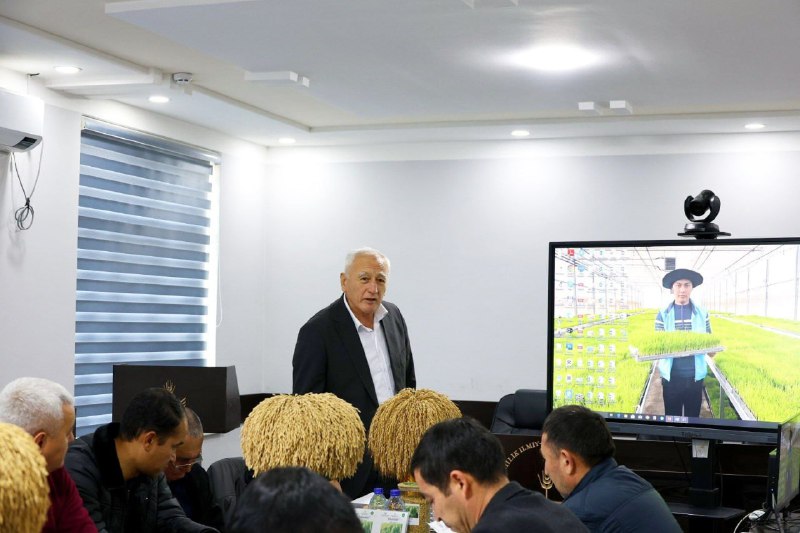
Today, a scientific-practical seminar was held in cooperation with the Rice Research Institute and the Uzbek-German expert dialogue program on testing and selection of fodder crops resistant to climate change, as well as improving seed production.
The director of the National Center for Knowledge and Innovation in Agriculture, Shodmon Namozov, opened the seminar with an introduction. In his speech, he noted that climate change and shortage of water resources are among the urgent tasks facing agriculture in today's globalization.
"The international cooperation implemented at the institute, especially the introduction of German experience, is of great importance in the rapid implementation of innovative ideas and scientific achievements. This will serve to strengthen the food security of our country, ensure soil fertility and increase the efficiency of the agricultural sector through new technologies," said Shodmon Namozov.
After that, Cholponoy Kashkaboyeva, a participant of the Uzbekistan-Germany program, gave a speech and gave detailed information about the results of the tests conducted in the soil and climate conditions of Uzbekistan, as well as the importance of the siderat crop and the initial experiences achieved in its cultivation.
In his speech, he said, "Our experiments have shown that siderate crops play an important role in naturally increasing soil fertility, improving its structure, and enriching crops with organic matter. This, in turn, reduces the demand for mineral fertilizers and helps reduce the costs of farmers."
The head of the program, Anton Van Engelen, told the participants of the event about the project's compliance with international standards and the prospects of research in Uzbekistan. - "Uzbekistan has a great potential for developing agriculture based on "green" and climate-resistant technologies. By adopting German experience and innovative approaches, it is possible to achieve significant economic and ecological results in the short term, especially in the field of fodder crop selection and improvement of seed production. We are ready to provide all-round assistance to our Uzbek partners in this regard," he said in his speech.
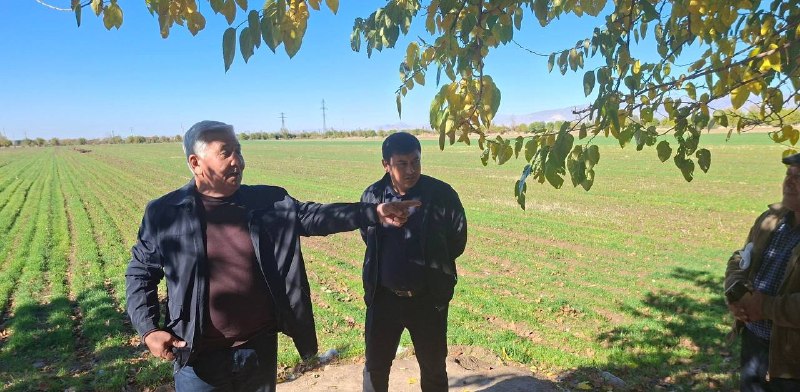
The most important and practical part of the event continued in the experimental fields of the institute. The participants were directly acquainted with the growth and development of the siderate crop planted in the field, its maintenance methods and the impact on the soil. Here, the experts inspected the experimental plots and exchanged detailed views on the ecological and agrotechnical advantages of the siderat crop.
Follow the official pages of the National Center.
Web | Telegram | Facebook | Instagram