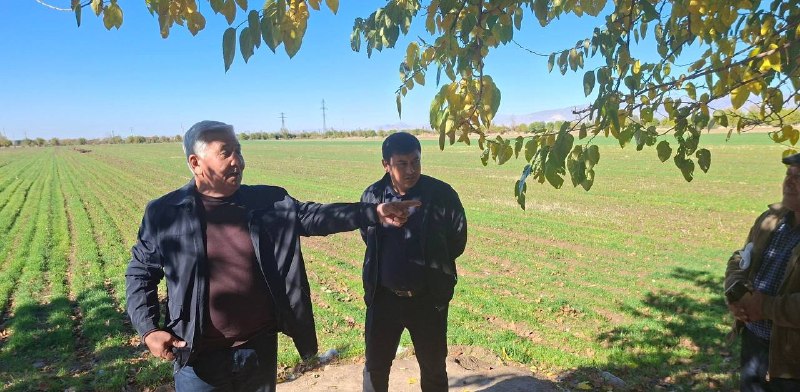

In the Navoi region, scientific work is being carried out on the transfer of bollworm and herbicide resistance traits of foreign varieties to local varieties.
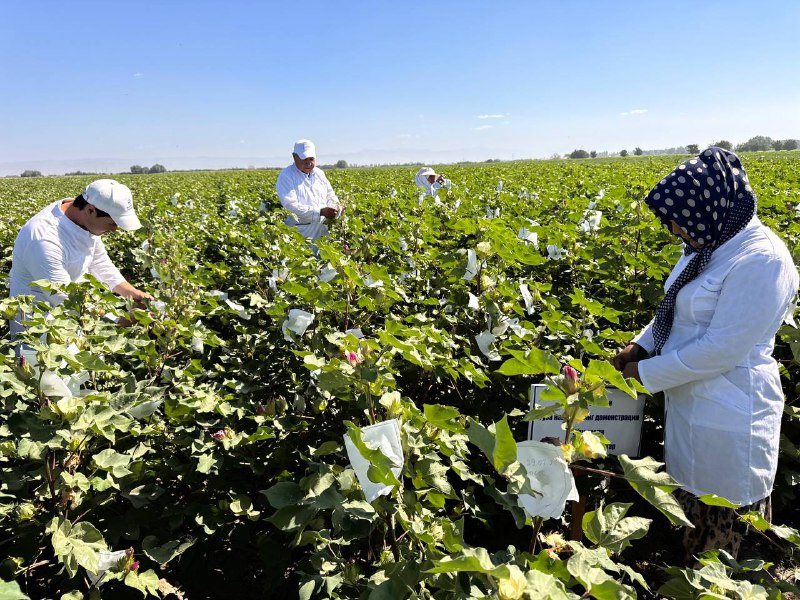
Scientific research aimed at creating new varieties of cotton that are productive, resistant to various diseases and pests and adapted to the climate continues consistently at the Navoi Scientific-Experimental Station of the Scientific-Research Institute of Cotton Selection, Seeding and Cultivation Agrotechnologies.
The main direction is hybridization of the XinluZo-52 variety with local varieties
The main focus of the research is on the crossbreeding of the Chinese-selected XinluZao-52 variety with local cotton varieties and the assimilation of useful genes through backcross (re-breeding).
This variety is a second-generation transgenic cotton with genetic tolerance to both bollworm and herbicide. This is very important for the cultivation system based on intensive agrotechnologies.
Hybridization and backcross work
In 2024, the XinluZao-52 variety was crossed with local cotton varieties and F1 offspring were obtained.
From June 26, 2025, backcross-2 breeding is being carried out in these F1 generations.
2443 flowers were crossed with 11 local varieties.
In addition, 1108 flowers with 5 local varieties were pollinated.
The main goal of these studies is to produce plants that are fully compatible with the local climate and agrotechnical conditions, and at the same time have a high yield,
is to create new cotton varieties that are resistant to water shortage and blight, resistant to bollworms and diseases, resistant to herbicides and high fiber quality.
The initial materials formed as a result of the ongoing breeding research will serve as an important basis for the creation of varieties with high genetic potential in cotton farming of Uzbekistan in the future.
Subscribe to the official pages of the National Center!
WEB|Telegram| Instagram | Facebook |▶ Youtube