
Process
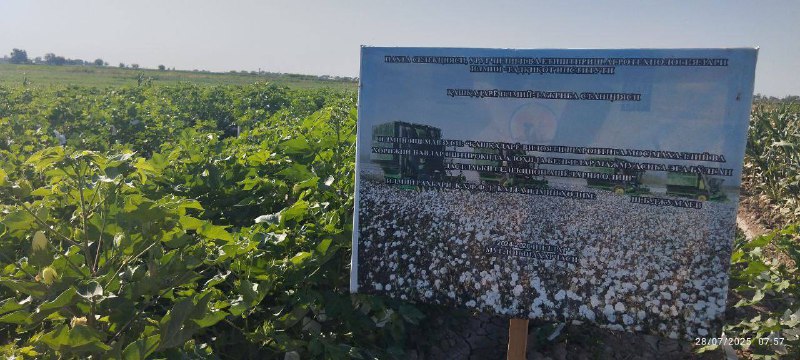
Transfer of priority genes from foreign cotton varieties to local cotton varieties is underway in Kashkadarya through backcross breeding.
In the Kashkadarya scientific-experimental station of the Scientific-Research Institute of Cotton Selection, Seeding and Cultivation, researches based on modern achievements in the field of selection were consistently carried out.
Within the framework of these studies, 16 local cotton varieties - 13 medium fibers (Bukhara-6, Bukhara-8, Bukhara-10, Bukhara-102, Porloq-4, Ravnaq-1, UzPITI-2601, SP-2602, SP-2635, Shahrisabz-1, S-8292, S-7306, Onqorgon-2) and 3 thin-fiber varieties (Kashkadarya-5, Marvarid, Surkhan-16) were crossed with the XinLuZao-78 variety created in China by reciprocal method. As a result, 32 hybrid combinations were created.
Backcross breeding method was used in order to transfer superior traits present in foreign cultivars to domestic cultivars, in particular genes for resistance to the bollworm (Helicoverpa armigera) and herbicides used against weeds. For this purpose, 2404 flowers were crossed with foreign variety XinLuZao-78.
- Our goal is to introduce the genetic advantages of foreign varieties, especially the features of resistance to insects and chemicals, while preserving the advantages of local varieties, such as climate compatibility and fiber quality, - say the selection scientists from Kashkadarya.
The method of backcross breeding allows for the systematic transfer of genetic traits to local varieties, the selection of hybrids and their strengthening at the next stages. This will serve as a solid scientific basis for the creation of productive, resistant and economically efficient cotton varieties in the future.
Subscribe to the official pages of the National Center!
WEB|Telegram| Instagram | Facebook |▶ Youtube