
World_Agriculture_
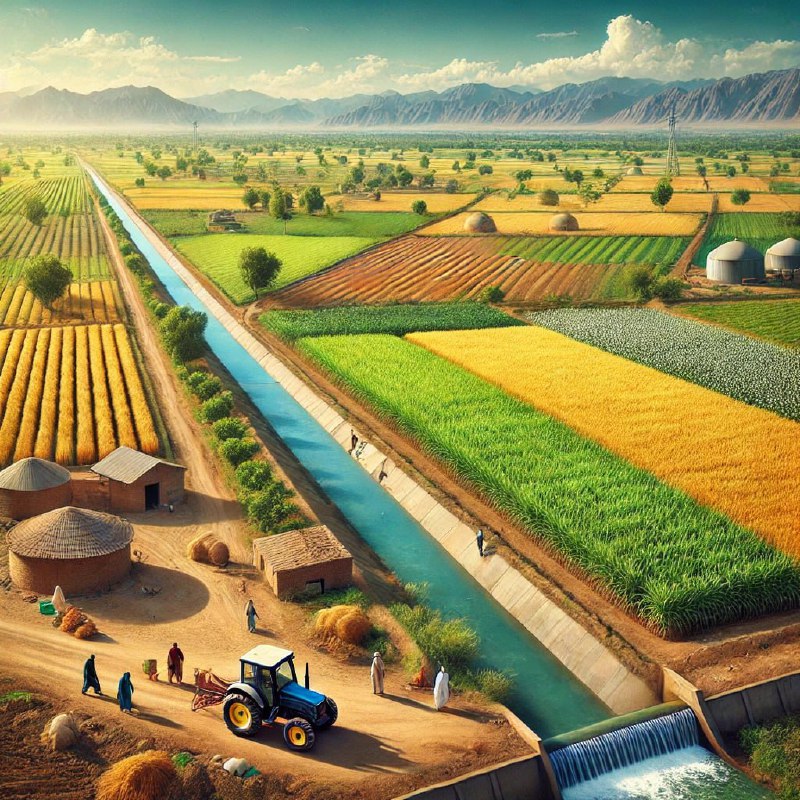
Agriculture of Pakistan: Main Sectors and Development Directions
Pakistan's agriculture is one of the important sectors of the country's economy and constitutes a significant part of the gross domestic product (GDP). This sector provides employment to a large part of the population and plays an important role in ensuring food security.
The main aspects of agriculture
Contribution to GDP: Agriculture accounts for approximately 19-24% of GDP.
Employment: 38-50% of the country's workforce is engaged in agriculture.
Food supply: Agriculture is the main source of food for urban and rural residents.
Export income: Rice and cotton are the main export products and occupy an important place in the country's export income.
Major crops and their importance
The following main crops are grown in Pakistan's agriculture:
Wheat is the main grain product important for domestic consumption.
Rice plays an important role in exports and is directed to the foreign market.
Cotton is the main source of raw materials for the textile industry.
Sugar cane is the main raw material in the sugar industry.
Oatmeal is used in animal husbandry and food industry.
In recent years, the economic importance of crops such as potatoes, peas, onions, peppers and tomatoes has been increasing. As the price increases and the demands of the consumer market increase, special attention is paid to their cultivation.
Cotton farming and its importance
Cotton farming is one of the important sectors of Pakistan's agriculture, and the country occupies one of the leading positions in the world in terms of cotton production.
Economic importance - cotton is the main part of the country's exports and provides a large part of foreign exchange earnings.
Jobs - Cotton farming and related industries provide jobs for many people.
Raw material for the domestic industry - as the main raw material of the textile industry, cotton is of strategic importance in the national economy.
Another important piece of information. Cotton varieties with BT gene are mainly grown in Pakistan today.
BT gene cotton and its advantages
Cotton with the BT (Bacillus thuringiensis) gene is a genetically modified variety that has natural immunity against insects. This type provides the following advantages in the field of cotton production:
Insect resistance – BT cotton reduces the need to use chemical insecticides.
Increased productivity - more yield compared to traditional cotton.
Low-cost cultivation - less money is spent on protective equipment, which increases the income of farmers.
Environmental sustainability – using fewer pesticides has a positive impact on the environment.
In Pakistan, BT cotton is widespread and economically beneficial for farmers. State and scientific centers are working on further development of this variety.
Water resources and agriculture
Pakistan is one of the countries with the largest irrigated land areas in the world. The Indus River and its tributaries are the main source of water and are very important for agriculture. Improvement of the irrigation system and rational use of water resources is one of the priorities for the development of the industry.
This material was prepared on the basis of data from Pakistan's official source - Pakistan Bureau of Statistics.
Subscribe to the official pages of the National Center!
WEB|Telegram| Instagram | Facebook |▶ Youtube