
Useful #Quince
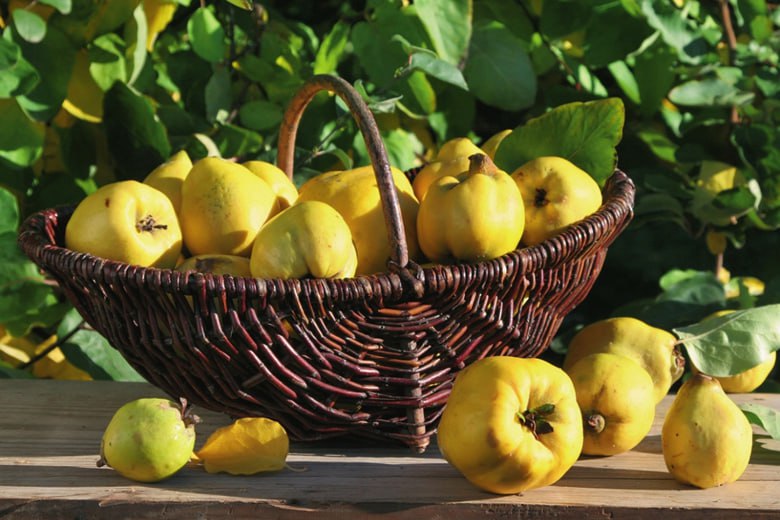
Quice is mainly a canned fruit. However, the fruits of most varieties of quince grown in Uzbekistan are also eaten as a "dessert".
Quince is one of the oldest plants, cultivated and cultivated in the regions of our republic.
In Uzbekistan, the quince tree grows well in irrigated lands located at an altitude of 360-1000 m above the river level, and at an altitude of 1100-1400 m above sea level, due to the shortness of the vegetation period, it is recommended to plant mainly quick-ripening varieties.
The above-ground parts of a quince tree consist of trunk (stump), central branch, growing branch, mother branches and secondary branches. It grows as a shrub or tree, reaching a height of 1.5 to 8 m. Many roots produce buds. The stem, buds and leaf band are covered with hair.
The flowers are often solitary, white or pale pink in color and large.
Quince blooms late, so a short spring cold does not harm the fruit buds.
It comes into harvest in 2-3 years faster than apples and pears. Quince is resistant to drought, it is more heat-demanding than apple and pear, and it is resistant to cold (-27 degrees). At extremely low (-30 degrees) temperature, fruit buds, one-year old and old branches are damaged.
The growth and development of a quince tree is different from other trees, that is, it grows in a spiral (spiral) according to the sunrise and sunset.
The quince plant is heat demanding. The average optimum temperature for its good growth and formation of fruit buds is 15-20 degrees.
Quince is an early harvester and gives abundant harvest for 35-40 years, lives up to 50-60 years.
DISEASES AND PESTS
apple worm,
moniliosis disease.
Subscribe to the official pages of the National Center!
WEB|Telegram| Instagram | Facebook | Youtube