
The results of scientific research on grain and leguminous crops were introduced

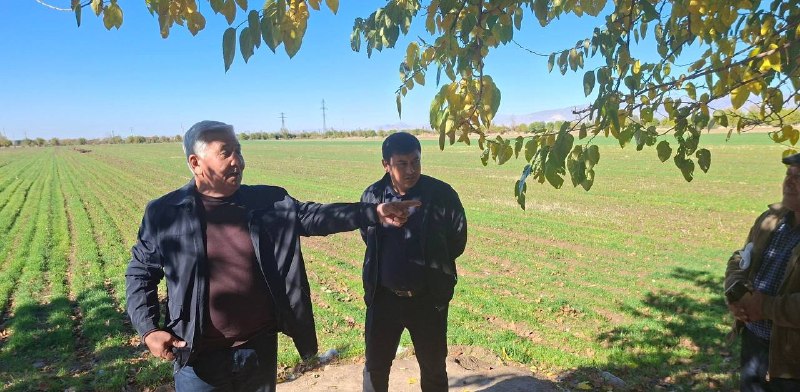
Shuhrat Otjonov, director of the National Center for Knowledge and Innovation in Agriculture, got acquainted with the results of scientific research carried out at the Research Institute of Grain and Legume Crops.
He reviewed the ongoing research on the creation of new varieties of winter wheat, innovative and resource-saving agro-technologies of primary seed production and cultivation. To date, more than 60 varieties of winter wheat have been created at the institute. In the following years, continuous work is being carried out to create ultra-fast varieties.
Widespread introduction of early varieties of winter wheat in cultivated areas will increase its productivity and create an opportunity for efficient use of land. It is also aimed to strengthen the fodder base for livestock by growing leguminous crops. The vegetation period of these quick varieties is 195-205 days, which is reduced by 15-20 days compared to standard varieties. This allows saving 750-800 m³ of water per hectare.
In the conditions of global climate changes, the yield will increase by 15-20 centners due to wheat ripening before the heat season. The technological quality indicators of grain will improve by 10-15%, and the possibility of growing leguminous, oil and fodder crops as repeated crops will expand. This makes it possible to harvest twice a year from the same field.
Also, creation of new varieties of leguminous crops - cowpea, green pea and lentil, as well as agro-technologies of primary seed production and cultivation are also studied within the framework of research at the institute. It is also worth noting that more than 45 local and foreign varieties of soybeans are being ecologically tested.
Subscribe to the official pages of the National Center!
WEB|Telegram| Instagram | Facebook |▶ Youtube