
DOLZARB
Practical seminars on grain care have started
In the current season, the dry and warmer than normal autumn months had a significant impact on the growth of grain crops throughout the republic. Due to low rainfall and high temperature in September-November, grain did not germinate in some fields, while others stopped at the 1-2 leaf or 3-4 leaf phase. This slowed down the rooting process, slowed down root development, and reduced resistance to winter cold.
As a result of dry conditions, there are negative situations like soil hardening, poor absorption of mineral fertilizers and lack of lawns. According to international experience, under such conditions, light irrigation of grain fields, feeding with ammonium sulfate, use of biostimulants, and agrotechnical measures that keep moisture in the soil for a long time are of decisive importance for farmers.
In this regard, the Ministry of Agriculture organized special working groups throughout the republic. Their task is to study the condition of each plot on the spot, analyze existing problems and give scientifically based recommendations to farmers.
The Republican working group for the regions of the Fergana Valley is headed by Oybek Amanov, the deputy director of the National Center for Knowledge and Innovations in Agriculture.
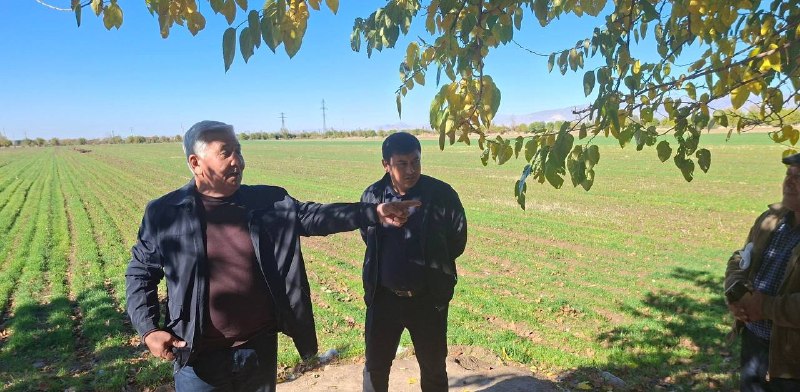
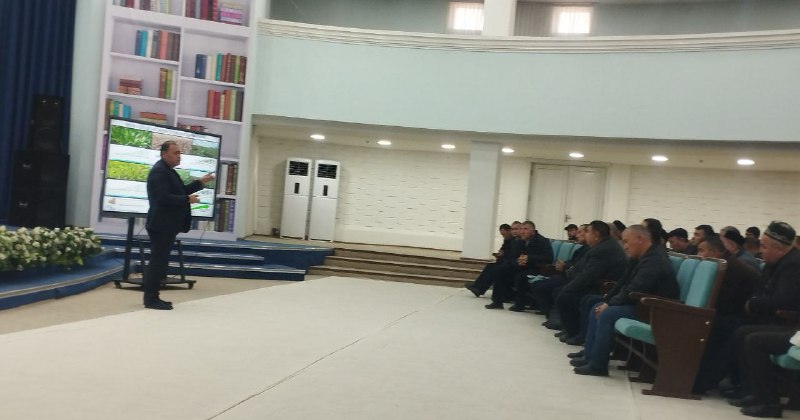
Currently, the members of the group are communicating directly with farmers and studying the condition of grain fields. One such meeting was held in Andijan district. During the seminar, concrete situations in the fields were considered, scientifically based answers were given to the questions raised by the farmers.
"Organize light irrigation without increasing the distance between the ditches for seed collection by 60-70 meters, use rotted manure or cover material to maintain soil moisture, give ammonium sulfate in moderation in yellow or underdeveloped areas, use liquid phosphorus biostimulants in areas with low phosphorus, use biostimulants in time to accelerate growth, as well as shredding and sunning it is necessary to ensure that the light falls well on the field"
- said Oybek Amanov in a conversation with farmers.
During the seminar, farmers were also given practical instructions on issues such as proper use of biostimulants, additional feeding in late developing areas, use of rotted local manure and introduction of water-saving technologies.
Experts say that if the recommended agrotechnical measures are implemented in time, it is possible to reduce the negative effects of the dry and warm conditions observed at the beginning of the season, and to form grain fields that are resistant to winter and have a stable development.
Follow the official pages of the National Center.
Web | Telegram | Facebook | Instagram