
What do you know about growing spring onions?
Onion is one of the most productive crops. In the words of a farmer, when the onion "year" comes, it brings forty years of blessings to the farmer's livelihood. However, just as halwa is not sweet in the mouth, onion cultivation has its own secrets and difficulties. And following the scientifically based recommendations of field scientists is the first step in achieving a good result. Below you can get acquainted with the recommendation of the scientists of the Scientific Research Institute of Vegetables, Pulse Crops and Potatoes of the National Center System.
VARIETIES OF ONIONS. It is recommended to plant the early-ripening "Sumbula", mid-ripening "Istiqbol" and "Zafar" varieties of onions created in local conditions.
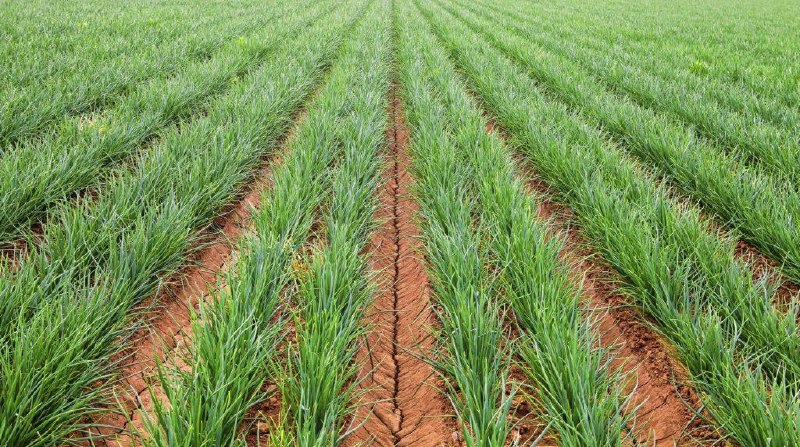
MAINTENANCE TECHNOLOGY. In Uzbekistan, onions are planted in three periods: spring, summer-autumn and spring. In the spring period, onions are planted in the southern regions on January 5-25, in the central regions from February 20 to March 10, and in the northern regions from March 5-25 at the rate of 12-15 kilograms per hectare with a "SKON-4" type seeder in four rows with a distance of 70-90 cm between the rows, depending on the slope of the land. Seeds are buried in the ground 1.5-2 cm deep. Two or three times, first when the height of the plants reaches 6-8 cm, the second time when it becomes a product that can be tied and released, it is planted and harvested. Against weeds between the rows, the soil is cultivated at a depth of 15-16 cm with the cultivator KRN-2.8 A.
Fertilization. In order to obtain an average yield of 30 tons per hectare, it is necessary to give an average of 300 kg of nitrogen, 220 kg of phosphorus and 90 potassium per hectare of gray soil. Also, it is recommended to give 250 kg of nitrogen, 200 kg of phosphorus, and 80 kg of potassium in meadow-swamp soils. 320 kg of nitrogen, 220 kg of phosphorus and 100 kg of potassium per hectare should be applied to saline lands with low soil quality.
DETAIL